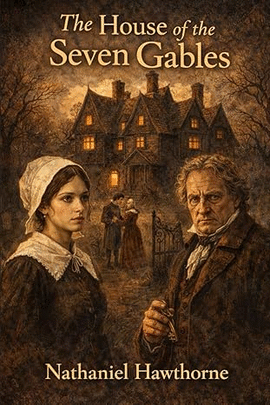
The House of the Seven Gables is a gothic novel of psychological depth and moral reflection, set in a decaying ancestral mansion haunted by generations of guilt, injustice, and inherited sin. Blending elements of romance, supernatural suggestion, and social critique, the novel examines how the past exerts power over the presentand whether redemption is possible without confronting historical wrongs.
The story centers on the Pyncheon family, whose fortunes were built upon a grave act of injustice. Generations earlier, Colonel Pyncheon accused his rival, Matthew Maule, of witchcraft in order to seize his land. Maule was executed, but not before uttering a curse upon the Pyncheon bloodline. The House of the Seven Gables, erected on the stolen land, becomes both a physical structure and a symbol of moral corruption and unresolved guilt.
In the present, the house is occupied by Hepzibah Pyncheon, a proud but impoverished gentlewoman forced by circumstance to open a small shop within her aristocratic home. Her isolation is broken by the arrival of her brother Clifford, recently released from prison after decades of wrongful incarceration for a crime engineered by another Pyncheon relative. Clifford is emotionally fragile, childlike, and haunted by lost time, embodying the human cost of familial ambition and cruelty.
Opposing them is Judge Jaffrey Pyncheon, a respected public figure whose genial appearance conceals ruthless self-interest. Like his ancestors, the Judge seeks wealth and power at any cost, perpetuating the cycle of exploitation that defines the familys history. His pursuit of a rumored hidden inheritance threatens to repeat the original crime that doomed the Pyncheons.
Into this oppressive atmosphere comes Phoebe Pyncheon, a young cousin whose warmth, vitality, and moral clarity introduce the possibility of renewal. Her presence transforms the gloomy household, offering compassion where bitterness once reigned. She forms a bond with Holgrave, a progressive young man descended from the Maule family, whose modern ideals and skepticism challenge inherited authority and superstition.
As the novel unfolds, past and present converge. Long-buried secrets emerge, and the curse upon the Pyncheon family reveals itself not as supernatural fate alone, but as the inevitable consequence of greed, repression, and moral blindness. The house itself seems to breathe with memory, bearing witness to centuries of wrongdoing.
The resolution of the story does not depend on punishment alone, but on recognition and moral change. Through love, empathy, and the willingness to relinquish unjust power, the cycle of suffering is finally broken.
The House of the Seven Gables is a meditation on ancestral guilt, social decay, and the possibility of moral regeneration. Rich in symbolism and atmosphere, it remains a powerful exploration of how history shapes identityand how compassion can reclaim the future.